- Egypt Weekly Roundup
- Posts
- Regional conflict threatens Egypt's stability 🧨
Regional conflict threatens Egypt's stability 🧨
What else: Red Sea land on offer, GEM delayed thanks to regional conflicts, China removes tariffs on Africa, and much more inside!

June 11 – 14 | 2025
Image: Egypt’s pristine Red Sea, which features in this week’s roundup.

Hey friends — hope your weekend was calmer than the mood across the Middle East.
Israel and Iran’s escalating conflict, sparked by Israel, has reignited regional tensions — and Egypt is among the many countries likely to feel the heat from the growing instability.
Dive into this week’s roundup to unpack what this all means for Egypt, plus more key stories from the past seven days.


ISRAEL | IRAN | REGIONAL CONFLICT
EGYPT CONDEMNS ISRAELI STRIKE ON IRAN, WARNS OF ‘WIDESPREAD CHAOS’ IN THE REGION

Credit: Mehr News Agency
Egypt sharply condemned Israel’s military attack on Iran, calling it a blatant violation of international law and a dangerous escalation that risks dragging the region into full-blown chaos.
Strong words from Cairo: Egypt’s Foreign Ministry said the airstrikes — which hit Tehran and reportedly killed top Iranian officers — pose a direct threat to regional and global peace and security. It warned that such “unjustified acts” would only deepen the crisis and “gravely endanger” the resources and stability of the region.
Diplomatic push: In a series of phone calls, Foreign Minister Badr Abdelatty discussed the aftermath of the Israeli attack with his Iranian counterpart Abbas Araghchi and several Arab foreign ministers. The conversations focused on the “unjustified and irresponsible” Israeli escalation, which Egypt said would have serious consequences for the region’s stability and the livelihoods of its people.
No to war, yes to peace: Egypt reaffirmed its long-standing position that there’s no military solution to regional conflicts, only political ones. “The arrogance of power will not bring security to any state in the region, including Israel,” the ministry said. True peace, Cairo stressed, can only come through respecting state sovereignty, ending occupation, and working toward justice.
Some context: On 13 June, Israel launched airstrikes across Iran targeting nuclear and military sites, including Tehran and the Natanz facility. Iran reported the killing of top IRGC commander Hossein Salami and other officials, with unverified civilian casualties. Israel said the strikes aimed to “roll back the uranium threat,” while Iran retaliated with over 100 drones—all intercepted, according to Israel. The UN, Egypt, and regional powers urged restraint amid fears of a wider conflict.
🌍️ MORE FOREIGN AFFAIRS:
🇵🇸 PALESTINE: Egypt’s government introduced new regulations requiring international delegations to obtain prior approval before visiting the Gaza border area via Egyptian territory. The move aims to address safety concerns amid the ongoing conflict, and follows controversy after a large group of foreign pro-Palestine supporters traveling in vehicles was turned away by Egyptian authorities – Read more
🇹🇷 TURKEY: President Abdel Fattah Al-Sisi held a call with Turkish counterpart, Recep Tayyip Erdogan, with the pair aligning on the urgent need to halt military actions between Israel and Iran and resume US-Iran negotiations – Read more
🇫🇷 FRANCE: President Al-Sisi shared a similar phone conversation with French leader, Emmanuel Macron – Read more
Introducing Saudi Streets — a new independent platform dedicated to exploring the stories, people, and ideas shaping Saudi Arabia today. Discover Saudi Arabia, differently.

FOREIGN DIRECT INVESTMENT | RED SEA | LAND DEAL
EGYPT ALLOCATES RED SEA LAND FOR FOREIGN INVESTMENT

Credit: Experience Egypt
As part of its ongoing push to ease economic pressures and trim public debt, Egypt is allocating a 174 square kilometer plot on the Red Sea coast to the Finance Ministry. The land will be used to back upcoming sukuk issuances —Sharia-compliant financial instruments that give investors ownership in real assets rather than debt obligations like traditional bonds.
Some déjà vu: The move echoes last year’s USD 35 billion (EGP 1 trillion) deal with the UAE to develop a similar-sized stretch along the Mediterranean known as Ras El-Hikma. Since then, Egypt has been pursuing more high-stakes investment partnerships—tapping into interest from Saudi Arabia, Qatar, and Kuwait.
What’s the plan? While the government hasn’t revealed exact details for how the land will be used, it’s likely to serve as part of the asset pool supporting a planned USD 2 billion (EGP 99 billion) sukuk issuance in 2025. Finance Minister Ahmed Kouchouk framed it as part of a broader effort to “innovate” out of the crisis.
Why it matters: Sukuks have become an increasingly popular tool for attracting diversified investors, particularly from the Gulf. Egypt hopes this financial engineering can help stabilize its books — and fast.
The backdrop: According to the latest data, Egypt’s economic landscape remains shaky. Inflation has surged to reaching 16.8 percent in May, up from 13.9 percent in April. While the Ras El-Hikma mega-deal offered respite, economic conditions still remain unstable, especially with rising energy demands during the country’s scorching summer season, and regional tensions escalating in parallel.
🏦 MORE ECONOMY:
🌐 WORLD BANK: The World Bank Group’s latest report shows an improved growth outlook for Egypt — projecting real GDP growth of 4.2 percent in the 2025/2026 fiscal year, rising modestly to 4.6 percent in 2026/2027 – Read more
💰️ FOREIGN DEBT: Egypt paid a total of USD 21.3 billion (EGP 1 trillion) in foreign debt servicing — comprising interest and principal repayments —during the first half of the 2024/25 fiscal year – Read more

GRAND EGYPTIAN MUSEUM | TOURISM
GRAND EGYPTIAN MUSEUM OPENING DELAYED DUE TO REGIONAL CONFLICTS

Image: Grand Egyptian Museum
The long-awaited opening of the Grand Egyptian Museum (GEM) has been pushed back, again. Prime Minister Mostafa Madbouly announced the postponement during a press conference, citing the ongoing instability in the region.
What was planned: The GEM was originally set to open on 3 July, with a three-day celebration expected to draw top officials from around the globe.
Why the delay? Madbouly said the government is factoring in the escalating regional tensions, which he warned are likely to continue and evolve in the coming period. Egypt is taking a cautious, wait-and-see approach before hosting a major international event.
Also on the mic: Madbouly used the presser to highlight a jump in Egypt’s natural gas reserves, saying they’ve doubled since last year—but he still urged citizens to conserve electricity, given the uncertain times.
“We’re all in the same boat,” he said, asking the public to stay mindful of power use as Egypt braces for any potential regional escalation.
🏠 MORE SOCIETY:
🎟️ TOURISM EXPERIENCE: Egypt’s Tourism Ministry launched self-service ticketing machines at the Saqqara archaeological site as a part of their strategy to improve tourist experiences – Read more
Learn AI in 5 minutes a day

What’s the secret to staying ahead of the curve in the world of AI? Information. Luckily, you can join 1,000,000+ early adopters reading The Rundown AI — the free newsletter that makes you smarter on AI with just a 5-minute read per day.
CHINA | TRADE | TARIFFS
EGYPT SET TO GAIN FROM CHINA CUTTING TARIFFS FOR AFRICAN EXPORTS
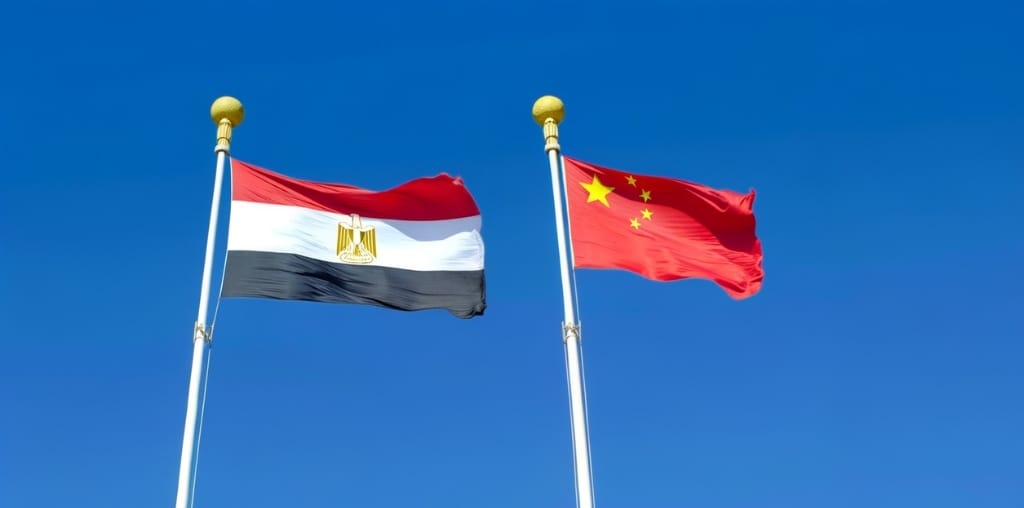
Image created with AI
Egypt and other African exporters are getting easier access to China’s massive consumer market. Beijing announced this week that it will drop import tariffs on a wider range of goods from African countries—including middle-income ones like Egypt, Nigeria, and Kenya.
What’s in the deal? The policy, announced during a ministerial review in Changsha, builds on commitments made at last year’s Beijing summit. China pledged additional support for least developed countries (LDCs) like Mali and Tanzania — such as training and marketing — but the headline is that duty-free access is now being extended to stronger manufacturing nations.
Why it matters: This is a big step forward for African nations with competitive industries. Tariffs were a major obstacle, making many African products more expensive in China compared to alternatives. With that barrier removed, Egypt could find new opportunities in textiles, processed food, electronics, and other value-added exports.
Some context: China-Africa trade has been growing — but heavily tilted in Beijing’s favor, with a USD 62 billion trade surplus in 2023. Egypt is one of the African countries that experience a significant trade deficit with China. In 2023, Egypt's imports from China were around USD 12.9 billion, while its exports to China were only about USD 909 million.