- Egypt Weekly Roundup
- Posts
- Sisi in Saudi 🇸🇦
Sisi in Saudi 🇸🇦
What else: How Egyptian parents invest in education, new North Coast land fees, four new free zones, and much more inside.

August 17 – 23 | 2025
(Credit: SPA.gov.sa)

Hello friends,
And a special hello to Egyptian swimmer Omar Sayed Shaaban for setting a new Guinness World Record with 2.32 meter leap up from the water while wearing a monofin — breaking his own 2.30 meter record set in 2020.
Now let’s dive into the Egypt Weekly Roundup.


NORTH COAST | REAL ESTATE INVESTMENT | POLICY
NEW LAND FEES IMPOSED ON FOREIGN AND LOCAL NORTH COAST DEVELOPERS

Egypt’s New Urban Communities Authority introduced new development fees on North Coast real-estate and tourism projects, charging USD 20 per square meter on foreign-owned or foreign-majority developments and EGP 1,000 per square meter on local projects.
To put it into perspective, a 250-feddan strip on the North Coast — just over 1 million square meters — would cost a foreign developer around USD 21 million (EGP 1 billion).
Immediate impact: Affected developers (some of Egypt’s largest) have already been suspended from utility services and licensing until they settle the owed fees, with electricity and water cut off developments for non-compliant companies.
Strategic intent: The proceeds are earmarked for the Tahya Misr Sovereign Fund, supporting broader development and poverty-reduction objectives. Government officials and industry representatives are reportedly negotiating phased payment schedules tied to infrastructure rollout and project execution plans.
🏦 MORE ECONOMY:
🛢️ OIL PRODUCTION: Egypt’s oil output slipped to its lowest level since the early 1980s, recording 513,000 barrels per day in Q2 2025 – Know more
💳 DIGITAL BANKING: The Central Bank of Egypt approved the creation of Egypt’s first fully digital native bank – Know more
💵 EXCHANGE RATE: The US Dollar gained back some ground against the Egyptian Pound after a few weeks of the EGP being in the green – Know more
Welcome to Valued Insights — your deep dive into Egypt’s ever-evolving business and economic landscape.
SCHOOL’S BACK: HOW EGYPTIAN HOUSEHOLDS INVEST IN EDUCATION

It’s that time of year again: school’s back. And while it’s a season filled with fresh notebooks and sharpened pencils, for many Egyptian families, it’s also a time of mounting expenses. The cost of basic supplies like stationery and lunchboxes has risen between 5 to 10 percent, with some branded items spiking over 40 percent due to inflation and currency shifts.
Even in public schools, where tuition fees are at a reduced cost, parents often spend thousands of pounds per child on uniforms, bags, devices, tutoring, and extra learning materials. But despite economic pressures, families continue to invest in their children’s education — with more thoughtful planning and smarter payment tools.
Spending smart on education: Instead of delaying purchases or cutting corners, more households are spreading out the cost. Flexible financing options now allow parents to manage all types of educational expenses without draining their savings all at once. That doesn’t mean overspending; it’s about maintaining educational priorities without unnecessary pressure.
That’s where financial solution providers, like Valu, come in. Not to encourage more spending, but to make essential spending more manageable.
Fintechs help families stay on track: From school supplies to executive education programs, Valu gives households more breathing room through flexible payments and a wide network of partner schools and universities — including AUC, ESLSCA, AIS, and many more universities and schools.
Continuing education is supported: Through collaborations, like the one with AUC, Valu enables working professionals to access executive education through low-stress, long-term financing options. It’s a practical solution for lifelong learners.
Whether you’re a parent managing school fees or a young professional pursuing career growth, Valu helps make those investments feel more achievable.
The bigger picture: It’s safe to say that education is one of the most meaningful investments any household can make. For parents, there will be no better investment in their children than their educational journey. And for Egyptian families navigating economic uncertainty, flexible financial tools like those offered by Valu can help keep that investment intact — not by encouraging overspending, but by easing the pressure of essential costs. As prices rise, the conversation is shifting from saving for school to managing school smartly.
The goal isn’t to spend more — it’s to make education manageable, accessible, and sustainable for every household, no matter their income.
FREE ZONES | TRADE
EGYPT TO LAUNCH FOUR NEW FREE ZONES TO BOOST EXPORTS
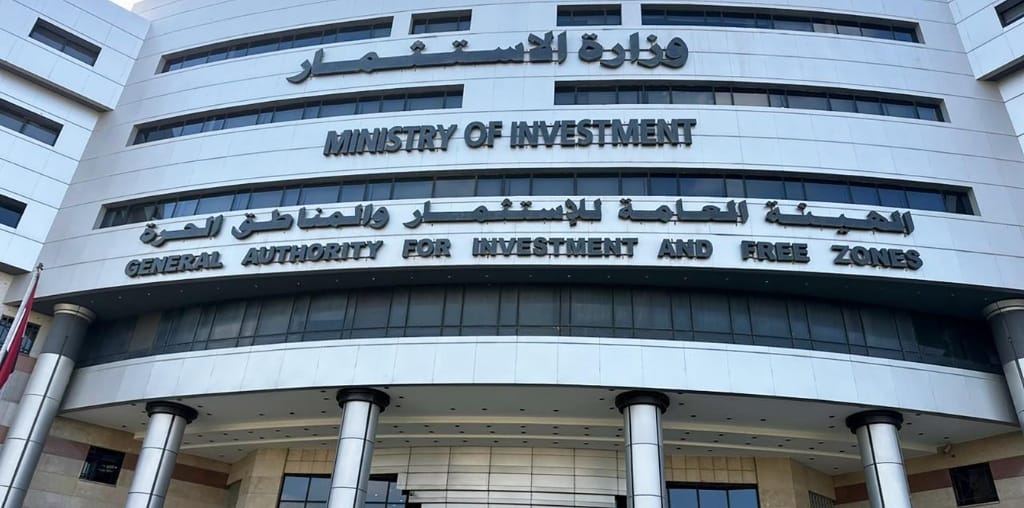
Egypt’s investment authority is moving ahead with four new public free zones in 10th of Ramadan, New October, New Borg El Arab, and New Alamein, after existing zones hit a 95 percent occupancy rate.
Export focus: The General Authority for Investment and Free Zones (GAFI) CEO Hossam Heiba said the zones will be fully export-oriented, supporting Egypt’s goal of USD 140 billion (EGP 6.7 trillion) in exports by 2030. He stressed that the model avoids competing with local investors, while leveraging incentives and prioritizing green compliance.
Next steps: The new zones are expected to be operational by the end of 2026, with infrastructure works fast-tracked in coordination with the New Urban Communities Authority. GAFI is also studying three more zones, which would raise the total to 16, while a new joint working group will align performance with national export objectives.
💡 MORE BUSINESS:
🤖 AI SUMMIT: Egypt will host the first edition of the “AI Everything Middle East and Africa” summit and exhibition in February – Know more
✈️ ALEXANDRIA AIRPORT: Alexandria’s Borg El Arab International Airport is getting a rebranding, officially being renamed to Alexandria International International Airport starting 4 September – Know more

SAUDI ARABIA | MIDDLE EAST
SISI AND MBS MEET IN NEOM, TALK GAZA AND BILATERAL RELATIONS
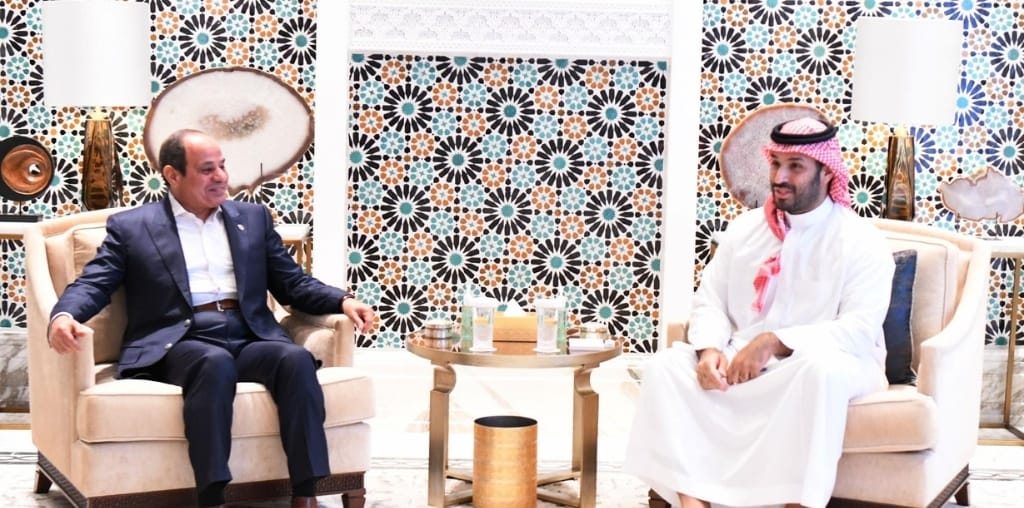
Image: Spokesman for the Egyptian Presidency / Facebook
Egyptian President Abdel Fattah Al-Sisi met with Saudi Crown Prince Mohammed bin Salman in NEOM, where both leaders talked Middle East politics and Egyptian-Saudi relations.
The two leaders agreed to accelerate the launch of the Egyptian-Saudi Supreme Coordination Council, which will drive cooperation in politics, trade, industrial integration, renewable energy, and urban development.
Geopolitics: Gaza dominated talks between the pair, with both sides stressing the urgency of delivering humanitarian aid, securing the release of hostages, and rejecting forced displacement of Palestinians or renewed Israeli military control over Gaza. They also voiced opposition to escalating Israeli practices in the West Bank.
Strategic signal: Observers view the meeting as another strong sign of coordination between Cairo and Riyadh at a time of heightened regional challenges. The encounter, amplified by the symbolism of being held at NEOM, underlines the joint role of both countries in shaping Middle Eastern stability.
🌍️ MORE FOREIGN AFFAIRS:
🇵🇸 PALESTINE: With so much unfolding in Palestine, several key stories stand out: Egypt voiced its “deep concern” after the UN formally declared a famine in Gaza for the first time (Know more), Hamas approved a 60-day ceasefire without a reciprocal sign from Israel (Know more), Egypt’s Foreign Minister stressed that Palestinian displacement in Gaza is a red line (Know more), and Egypt continues to send humanitarian aid convoys (Know more)
🇮🇳 INDIA: Egypt and India are pushing to boost economic cooperation, with Egypt’s Industry Minister formally inviting Indian companies to invest in renewable energy, infrastructure, and manufacturing during a meeting with India’s Ambassador to Egypt – Know more
🇯🇵 JAPAN: Egypt’s Prime Minister Mostafa Madbouly witnessed a memorandum of understanding signing between the Suez Canal Economic Zone and Tokyo’s Bureau of Industrial and Labor Affairs to boost green hydrogen cooperation – Know more